


“It’s like everyone woke up on January 1st to realize that returns had reached their highest level in nearly 20 years,” said Scott Kimball, chief investment officer at Loop Capital Asset Management. “From a Capital structure perspective, it’s hard to ignore this, given the fairly high valuations of stocks.”
Investors flocked to highly rated corporate bonds before the Federal Reserve cut interest rates.
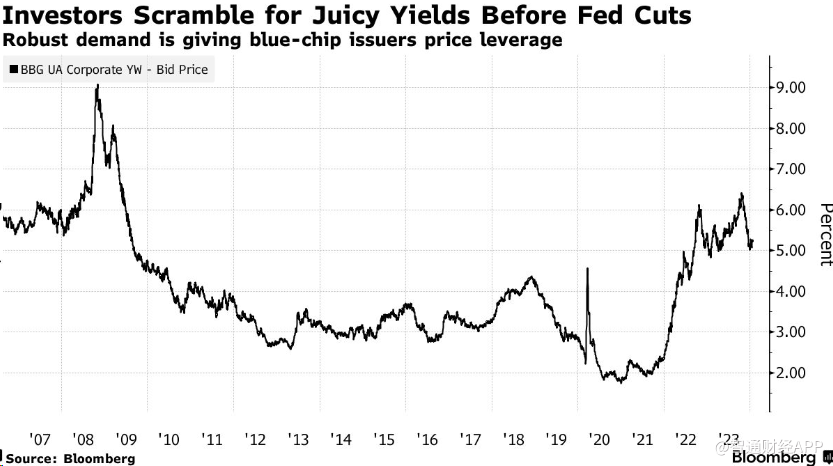
Data compiled by Bloomberg shows that a broad measure of yields on investment-grade corporate bonds surged to nearly 6.5% at the end of last year, a new high in more than 14 years.
Procter & Gamble's bond issuance comes at a time of frenzy in the primary market, with new issuances up 32% year-on-year so far in 2024.
A growing number of investors are speculating that the Federal Reserve will implement monetary easing policies sometime this year. However, with the timing of interest rate cuts uncertain, investors have begun to buy large quantities of new high-rated bonds, which typically have long lifespans and would become attractive investment targets if interest rates begin to decline.
This week, the average additional yield for investors holding corporate bonds relative to the U.S. Treasury Bond has fallen to 96 basis points, slightly below the lowest level in two years. Meanwhile, the spread on Procter & Gamble's 10-year bonds has narrowed from about 55 basis points in earlier discussions, according to a person familiar with the matter.