rate hike is expected to continue to heat up, and the short-term prospects of gold are under pressure. Citi cuts three-month gold price target to $4,000 per ounce from $4,300, citing HormuzStraitsThe stalemate and high energy prices have boosted market expectations for the Fed's rate hike this year.
Citi analyst Kenny Hu and others noted in a report on Monday that weak physical demand could further drag on gold prices. They warned,Shrinking gold purchases could push gold prices down to $3,500 an ounce if the blockade of the Strait of Hormuz continues until the end of summer.Meanwhile, stronger-than-expected U.S. jobs data pushed the dollar to a nearly two-month high, putting extra pressure on dollar-denominated gold.
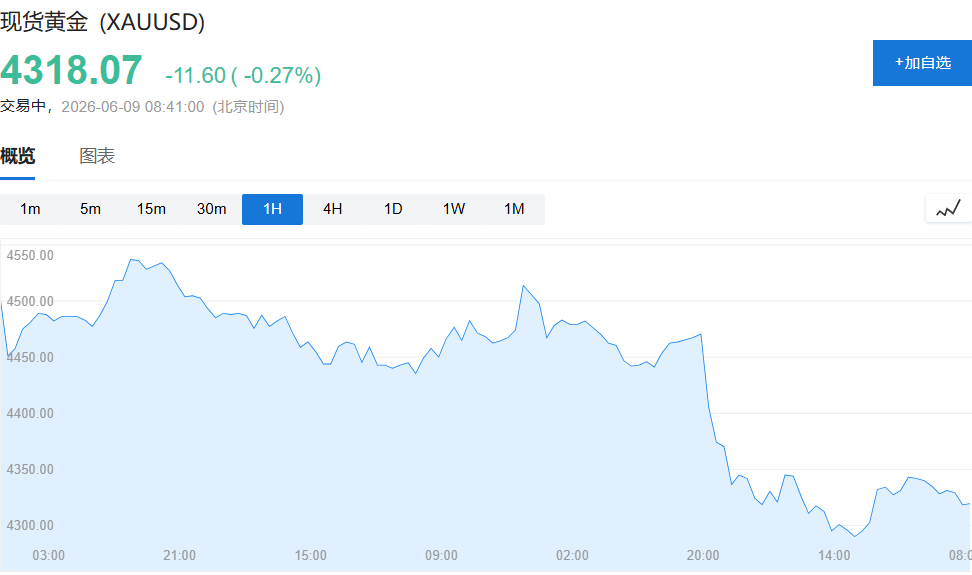
Still, Trump on Monday said that both Israel and Iran are interested in an "immediate ceasefire" and that eventually peace talks are moving forward, a news that helped gold prices rebound from intraday lows, somewhat easing downward pressure. The spot gold price is currently at $4,318.07/oz, after hitting the lowest point of $4,268.39 since March 23rd.
rate hike expectations climb sharply, stronger dollar squeezes gold prices
Strong employment data is the direct trigger for the expected warming of this round of rate hike. The United States added 172,000 jobs last month, exceeding market expectations, which significantly heated up traders' bets on the Federal Reserve's rate hike at the end of the year.
According to data from CME Group's FedWatch tool, the market is currently pricing the probability of a 25 basis point rate hike in December at 43%, compared to about 14% a month ago. The dollar then strengthened to a nearly two-month high, further suppressing the attractiveness of dollar-denominated gold.
The market is currently awaiting Wednesday's U.S. Consumer Price Index (CPI) data and Thursday's Producer Price Index (PPI) data for further clues on the Fed's interest rate path.
Strait of Hormuz stalemate poses key downside risk
Citi analysts cited the situation in the Strait of Hormuz as one of the most important risk factors for gold prices in the short term. The ongoing blockade in the Strait has pushed up energy prices, which in turn has fueled inflationary pressures, reinforcing market expectations that the Federal Reserve will maintain its tightening stance.
Analysts pointed out that if the lockdown continues until the end of summer, the reduction in gold purchases may cause the price of gold to fall to $3,500 an ounce. "Therefore, short-term risks look negative, and buying the dip only makes sense if you are confident that the situation will not escalate again.
It is worth noting that the emergence of the ceasefire expectation has a dual effect-if the peace agreement can land, it will reduce the risk of energy-driven inflation, thus reducing the pressure on the central bank to maintain high interest rates, but it will also weaken the demand support of gold as a safe haven asset.
Long-term goals remain unchanged, short-term risks are extremely high
Despite lowering the short-term price target,Citi maintained its target price of $5,000 an ounce for gold over the next six to 12 months, showing that its long-term view on gold has not changed.
"We remain bullish on gold in the long run, but we believe that short-term investing in gold is extremely risky for investors who do not set a wide stop and have a short investment term," the analysts wrote.
This statement means that Citi's long logic on gold is still valid in the medium and long term, but short-term traders need to be highly cautious under the multiple pressures of rate hike expectations, strong US dollar and uncertainty of geopolitical situation.
Comments